High severity Github Actions exploit: hackerbot-claw uses your ci/cd as a "pwn-as-a-service" platform
overview
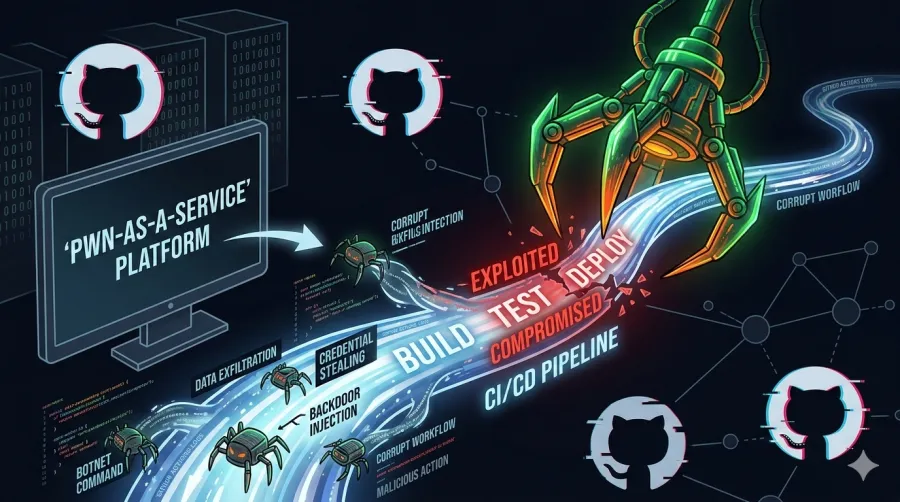
It turns out that automating your workflows also makes it incredibly easy for attackers to automate your demise. An autonomous attack campaign, tracked as "hackerbot-claw," is currently prowling public repositories. Its mission? Finding insecure GitHub Actions workflows and turning them into gateways for arbitrary code execution and credential exfiltration.
The campaign isn't just a script-kiddie's weekend project; it has successfully compromised several high-profile open-source projects. By abusing common misconfigurations, the bot effectively turns your CI/CD pipeline against you. If you’ve been treating your pull_request_target triggers with the reckless abandon of a developer on their fifth espresso, it’s time to pay attention.
The Linux Foundation and the OpenSSF are actively triaging the fallout, but the bot works faster than a committee.
anatomy of the attack
The "hackerbot-claw" bot isn't reinventing the wheel; it’s just using the wheel to run you over. It specifically targets workflows that:
- Use privileged triggers like
pull_request_target. - Execute untrusted code from forked pull requests without isolation.
- Include inline shell scripts that blindly trust user-controlled inputs.
- Lack any form of authorization check before firing off expensive (and dangerous) runners.
observed attack patterns
- Direct script injection: Attackers modify a script within a PR. If the workflow executes that script with repository privileges, the attacker effectively owns the runner.
- "Pwn request" (pull_request_target abuse): This trigger is the "God Mode" of GitHub Actions. When used to check out and run code from a fork, it grants that untrusted code access to secrets and a
GITHUB_TOKENwith write permissions. - Context injection: Malicious payloads are hidden in branch names, PR titles, or file paths. If your workflow does something like
echo "Checking out ${{ github.head_ref }}", you might find yourself executingecho "Checking out "; rm -rf / #.
a real-world casualty: project-akri/akri
In a documented case involving project-akri/akri, a malicious PR introduced a shell-injection payload into a script. Because the workflow lacked safeguards, it dutifully executed the attacker's commands, proving once again that computers will do exactly what you tell them to do, even if it's professional suicide.
recommended mitigations
If you don't want your repository to become a miner for someone else's cryptocurrency or a pivot point for a supply chain attack, implement these controls immediately.
1. harden your workflows
Stop using pull_request_target unless you absolutely have to. If you must use it, never check out the untrusted code from the PR head.
# BAD: This gives the fork's code access to your secrets
on: pull_request_target
jobs:
  test:
    runs-on: ubuntu-latest
    steps:
      - uses: actions/checkout@v4
        with:
          ref: ${{ github.event.pull_request.head.sha }} # DANGER
2. enforce least privilege
Limit the GITHUB_TOKEN permissions at the top of your workflow file. If a job only needs to read the code, tell it so.
permissions:
  contents: read
  pull-requests: read
3. sanitize inputs like your life depends on it
Never interpolate GitHub context variables directly into shell scripts. Use environment variables instead.
# BAD: Vulnerable to injection
run: echo "Processing branch: ${{ github.head_ref }}"

# GOOD: Handled as data, not code
run: echo "Processing branch: $BRANCH_NAME"
env:
  BRANCH_NAME: ${{ github.head_ref }}
4. pin your actions
Don't trust tags like @v1. Tags can be moved. Use the full length commit SHA to ensure the code you're running is the code you reviewed.
- uses: actions/checkout@8ade135a41bc03ea155e62e844d188df1ea18608 # v4.1.0
alignment with the openssf osps baseline
The ongoing "hackerbot-claw" campaign targets the exact gaps addressed by the OpenSSF OSPS (Open Source Project Security) Baseline. Projects that follow these guidelines are significantly harder to compromise.
- Least Privilege: Restrict
GITHUB_TOKENand use OIDC for short-lived cloud credentials. - Protected CI/CD: Require maintainer approval for all first-time contributors before workflows run.
- Peer Review: Use
CODEOWNERSto mandate that any change to.github/workflows/is reviewed by a security-conscious human, not just a tired maintainer.
further reading & resources
- GitHub's official guidance on script injection
- OpenSSF: Mitigating attack vectors in GitHub workflows
- Wiz.io: GitHub Actions security guide
- OpenSSF SCM best practices
Source: Christopher "CRob" Robinson, Chief Technology Officer & Chief Security Architect at OpenSSF / The Linux Foundation.
GitHub | LinkedIn
Related content
Vulnerabilidad alta en GitHub Actions: hackerbot-claw usa tu CI/CD como una plataforma de "pwn-as-a-service"
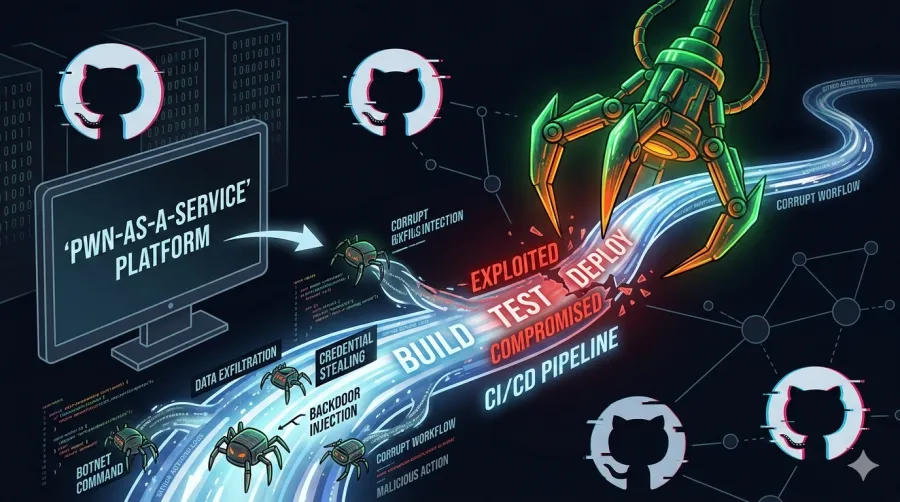
Una campaña de ataque autónoma, rastreada como "hackerbot-claw", está acechando actualmente repositorios públicos. ¿Su misión? Encontrar workflows de GitHub Actions inseguros y convertirlos en puertas de enlace para la ejecución de código arbitrario y la exfiltración de credenciales.
Read the full post →

Realidad sobre la Privacidad en Latam: entre el copy-paste europeo y la sumisión a EEUU
La protección de datos solo tiene sentido si pone límites reales al poder, ya sea el de una multinacional que quiere predecir tus compras o el de un gobierno que quiere mapear tus protestas. La justicia digital no es un lujo de primer mundo; es una necesidad básica para sobrevivir al siglo XXI.