
Why I trust Kubernetes: The Built-In Zero-Trust Model with Mutual TLS (mTLS)
Kubernetes is often celebrated for its scalability, reliability, and portability. However, one feature that often goes under the radar is its built-in zero-trust model enforced through Mutual TLS (mTLS). In this article, we'll explore how Kubernetes enforces mTLS to ensure secure communication between services and clients.

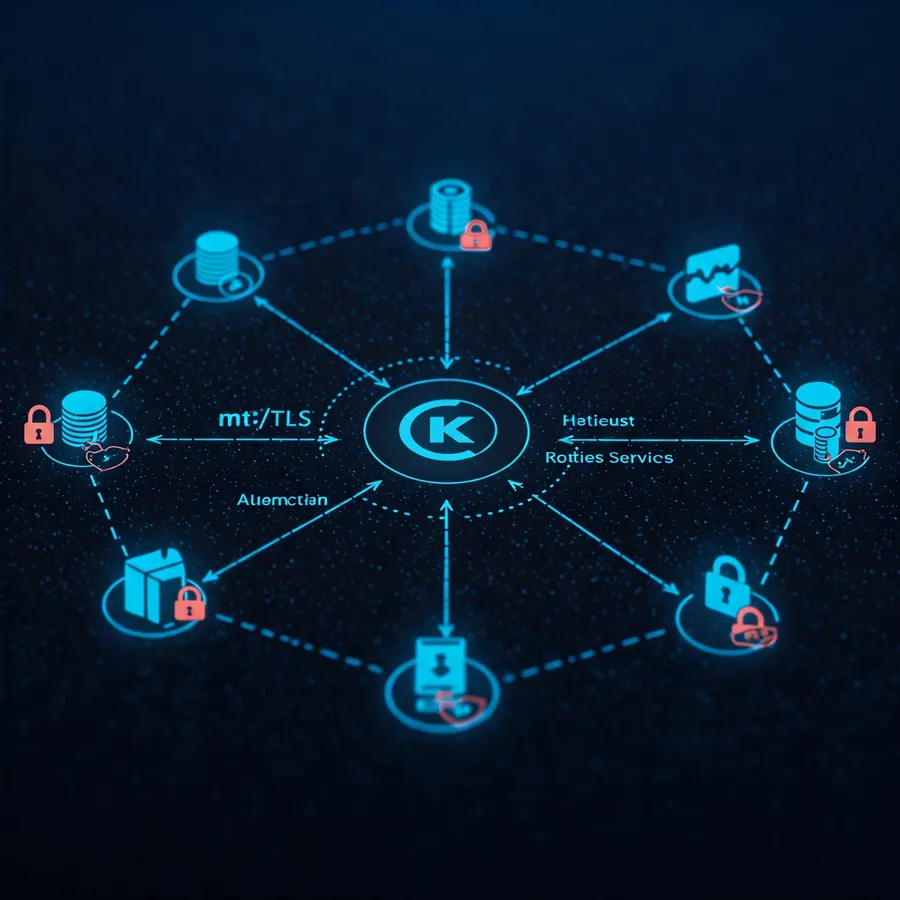
Kubernetes is often celebrated for its scalability, reliability, and portability. However, one feature that often goes under the radar is its built-in zero-trust model enforced through Mutual TLS (mTLS). In this article, we'll explore how Kubernetes enforces mTLS to ensure secure communication between services and clients.
What is Mutual TLS (mTLS)?
Mutual TLS, or mTLS, is a security mechanism where both the client and server authenticate each other using digital certificates. Unlike traditional TLS, where the server is trusted by default, in mTLS, no一方 is implicitly trusted. This creates a strict "zero-trust" environment.
How Does mTLS Work in Kubernetes?
In a Kubernetes cluster, every service (including the API server, scheduler, and etcd) communicates via mTLS. Here's how it works:
- Client Authentication: When a client (e.g.,
kubectl, a pod, or another service) wants to communicate with the Kubernetes API server, it must present a valid client certificate. - Server Authentication: The API server also presents its own certificate to prove its identity to the client.
- Certificate Management: All certificates are managed by the Kubernetes control plane and stored in the
kubernetes_directory/ssldirectory (typically/etc/kubernetes).
This process happens for every request, regardless of whether it's from a human, machine, or another service.
The Role of the Kubeconfig File
The kubeconfig file is central to mTLS in Kubernetes. It contains three critical fields:
clusters.certificate-authority-data: The server's CA certificate used to validate server identity.users.client-certificate-data: The client's public key, used to verify the client's identity.users.client-key-data: The client's private key, required for signing requests.
These fields ensure that both the client and server can establish trust by verifying that their certificates are signed by the same CA (Certificate Authority).
Why is mTLS Important in Kubernetes?
- Zero-Trust Architecture: No internal or external entity is trusted by default.
- Secure Service-to-Service Communication: Every service must authenticate itself to communicate with others.
- Comprehensive Security: Even internal services like the scheduler and etcd use mTLS, ensuring that no component can act maliciously without proper authentication.
Closing ideas
Kubernetes' implementation of mTLS is a cornerstone of its security model. By enforcing mutual authentication at every level, Kubernetes ensures a robust zero-trust environment, making it harder for attackers to compromise the cluster